Clean grout-free shower walls after a shower replacement

How to Get Rid of Mold in Shower Grout

Scrubbed It Again, and the Mold Came Right Back?

To get rid of mold in shower grout, scrub it with a vinegar spray or a hydrogen peroxide and baking soda paste, then rinse and dry the area. If it keeps coming back, the grout itself may be the problem. Grout is porous, so it holds water, and old or cracked grout gives mold a place to live.

The short answer

Spray the grout with equal parts white vinegar and water, or spread on a paste of hydrogen peroxide and baking soda. Let it sit, scrub with a stiff brush, rinse and dry. Never mix bleach with vinegar or ammonia. If the stains come back fast, or the grout is cracked or crumbling, cleaning won't fix it.

Why Mold Grows in Shower Grout

  • Grout is porous, so it soaks up water and stays damp
  • Soap scum and body oils give mold something to feed on
  • Poor airflow keeps the shower wet for hours
  • Old, cracked or unsealed grout holds even more moisture

How to Clean Moldy Grout

  • Open a window or run the fan, and wear gloves.
  • Spray with equal parts white vinegar and water, or apply a hydrogen peroxide and baking soda paste.
  • Let it sit for 10 to 30 minutes.
  • Scrub the grout lines with a stiff brush.
  • Rinse well and dry the area.
  • Never mix bleach with vinegar or ammonia. The fumes are dangerous.

How to Keep Mold From Coming Back

  • Run the bathroom fan during and after showers
  • Squeegee or wipe the walls after you shower
  • Leave the shower door or curtain open to dry
  • Reseal grout on the schedule your tile installer recommends

When It's Time to Stop Scrubbing

Cleaning can't fix grout that's failing. Watch for these signs:

  • Stains come back within days of cleaning
  • Grout is cracked, crumbling or missing
  • Tiles feel loose, or the wall feels soft
  • Caulk keeps peeling, or you see water stains outside the shower

The Grout-Free Fix

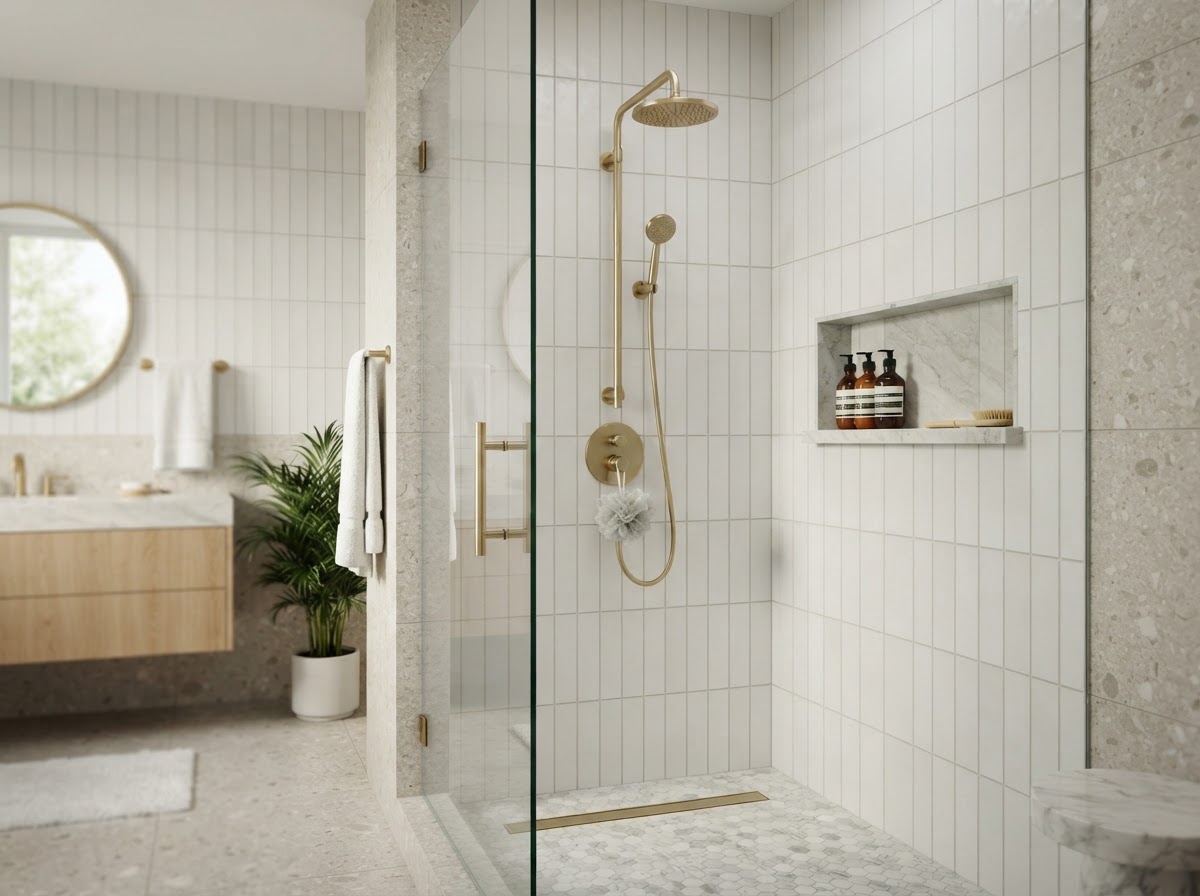
If you're done scrubbing, a grout-free shower takes the grout out of the picture. Our walls are a nonporous, high-tech polymer surface with no grout lines, sealed at the corners. Cleaning is spray and wipe.

When we replace your shower, we remove the old walls instead of covering them up. If we find water damage behind them, we stop, show you and talk through the fix together.

We're not mold experts. If mold has spread beyond the shower or you have health concerns, talk to a mold professional first.

QUESTIONS PEOPLE ASK

Common Questions.

Many people use vinegar or hydrogen peroxide on grout, because bleach can lighten the stain without reaching mold deep in the grout. Whatever you use, never mix bleach with vinegar or ammonia.

Grout is porous, so it stays damp and catches soap scum. Add warm air and poor airflow, and mold has what it needs.

Clean it the same way. If the stain is under the caulk, cut out the old caulk, clean and dry the area and recaulk. If it keeps coming back, water may be getting behind the wall.

Avoid mixing cleaners, especially bleach with vinegar or ammonia. Harsh scrubbing tools can also wear down grout over time.

No shower is mold-proof, and our warranty doesn't cover mold. A grout-free, nonporous surface gives moisture fewer places to sit, and it's quick to wipe clean.
Completed bathroom remodel
YOUR BATHROOM. YOUR NEXT STEP.

Done Fighting Grout?

See what a grout-free shower would look like in your bathroom. Get a written price at a free in-home visit.