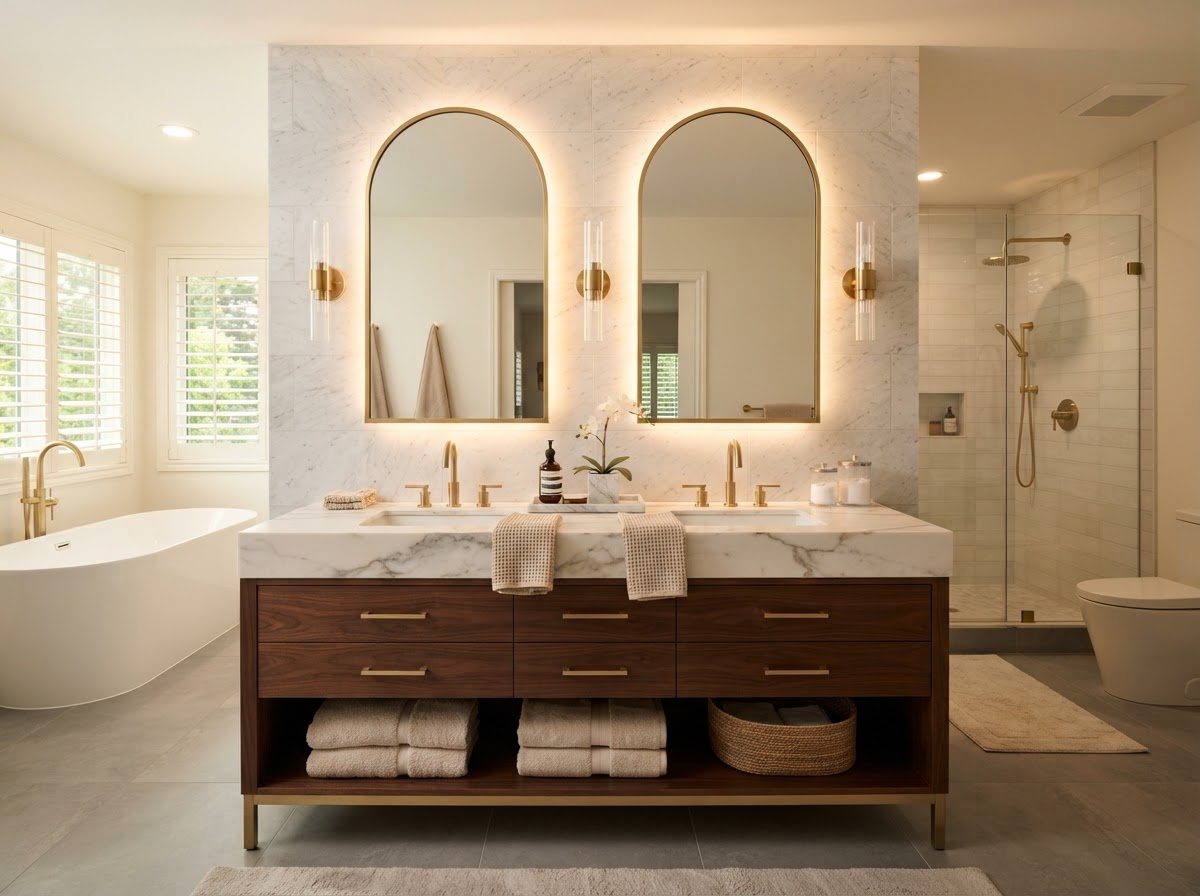
What Makes a Shower Easier to Use
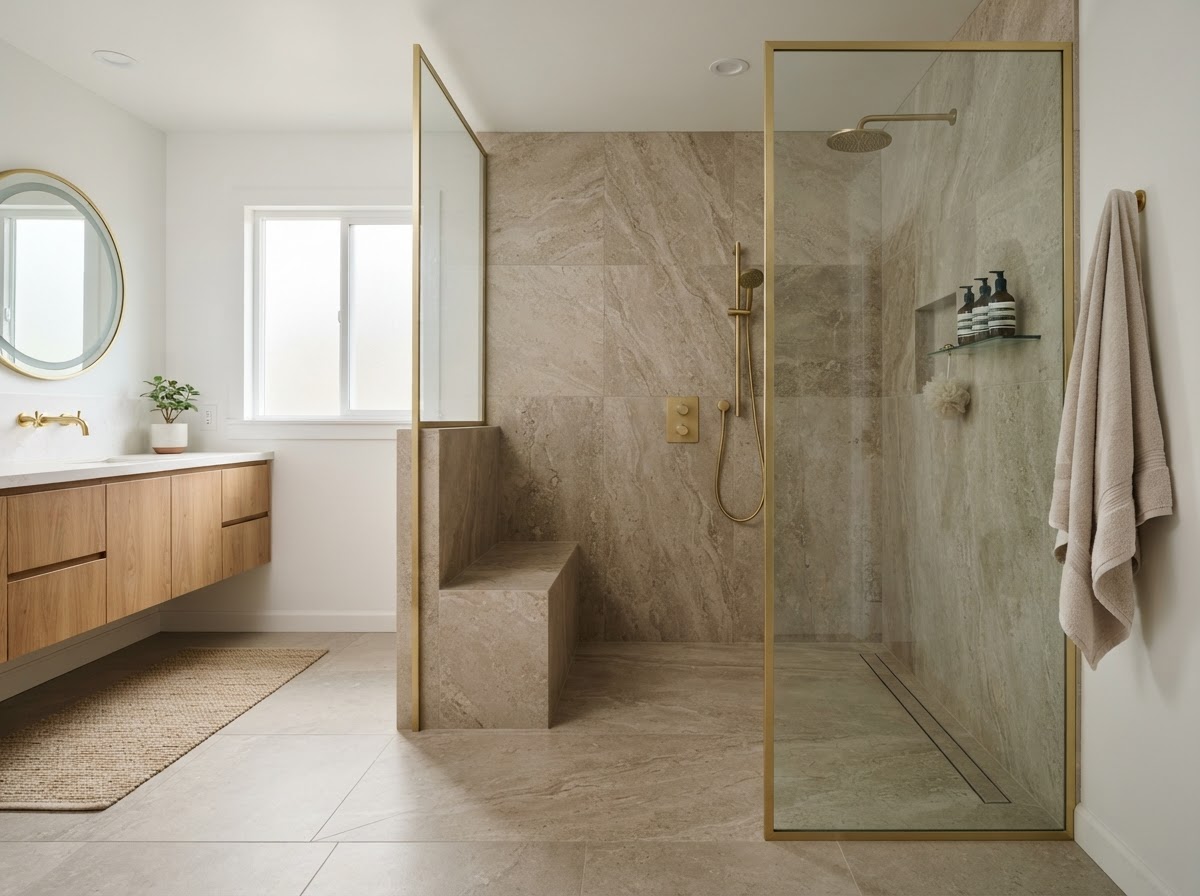
- A lower step-in base, so there's less to step over
- A slip-resistant shower floor, standard on our shower pans
- Grab bars where you need them: at the entry and by the controls
- A shower seat for resting while you bathe
- A handheld showerhead you can use sitting or standing
- Safety Soft slip-resistant flooring for the shower base or seat
- A glass door, or a curved shower rod for more room to move
How a Tub-to-Shower Conversion Works
Our crew removes the old tub and walls and installs a new shower base and grout-free walls in the same spot. We don't move plumbing. Most of the bathroom stays untouched, and the project can be done in as little as one day for qualifying projects; some take 2-3 days.
Your designer will talk with you about who uses the bathroom and what's hard today. That helps you pick the right base, seat and grab bar spots.
Planning Tips for Families
- Bring everyone who helps decide to the free consultation, including the person who will use the shower.
- Think about today and the next several years, not just right now.
- If young grandkids visit often, think about whether another bathroom in the house still has a tub.
- Ask your designer to show you seat and grab bar options in your space.
Ways to Pay for a Walk-In Shower
Financing is available, so you can spread the cost over time.
Original Medicare generally treats walk-in showers and tubs as home changes, not medical equipment, so it usually doesn't pay for them. Some Medicare Advantage plans may offer limited help. Check with your plan.
Veterans may qualify for a VA Home Improvements and Structural Alterations (HISA) grant for medically necessary changes. The lifetime limit is $2,000, or $6,800 for service-connected cases. The VA must approve the work first, so talk to your local VA Prosthetic and Sensory Aids Service before work starts.